
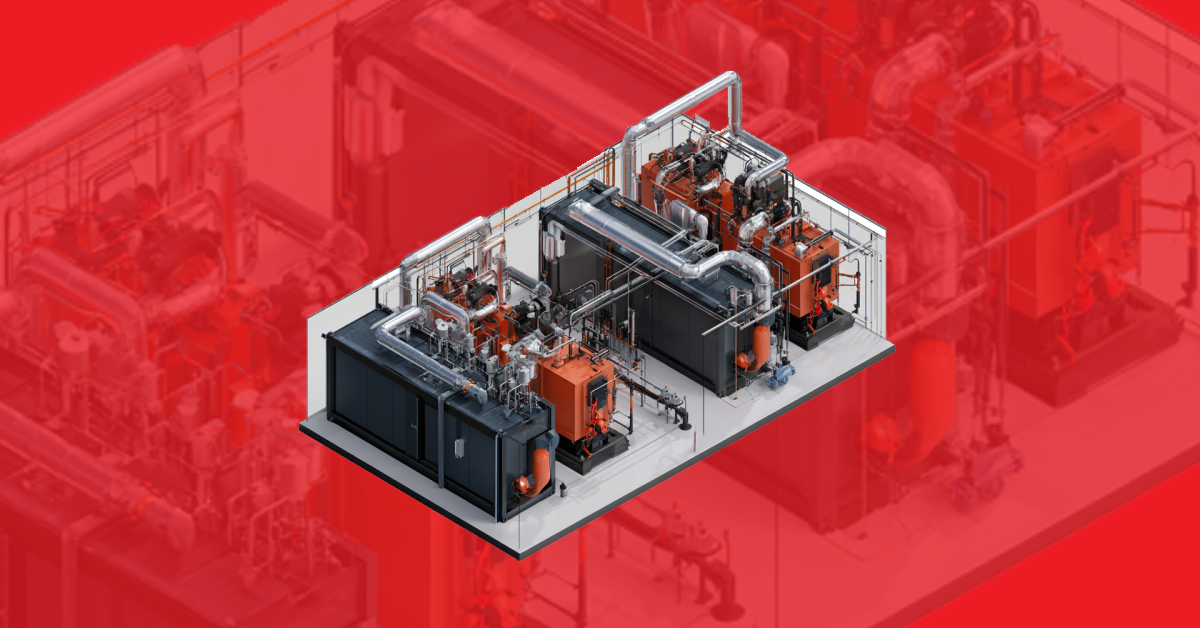
A packaged boiler room designed for the current building load that cannot accommodate additional capacity when the load grows is a system that will force a difficult decision in five or ten years. The owner will either accept inadequate heating capacity, undertake a disruptive mechanical room retrofit to add boilers and pumps that were not planned for in the original design, or replace the packaged system entirely before it has reached its economic life.
Modular boiler room design addresses this problem at the design stage. A packaged system designed with expansion in mind arrives with the structural provisions, the piping header capacity, the electrical infrastructure, and the controls architecture to accommodate additional boilers, pumps, or heat transfer equipment when the building load requires it. The expansion does not require a mechanical room retrofit. It requires connecting the next module to the infrastructure that was designed to receive it.
Designing the distribution headers for expansion
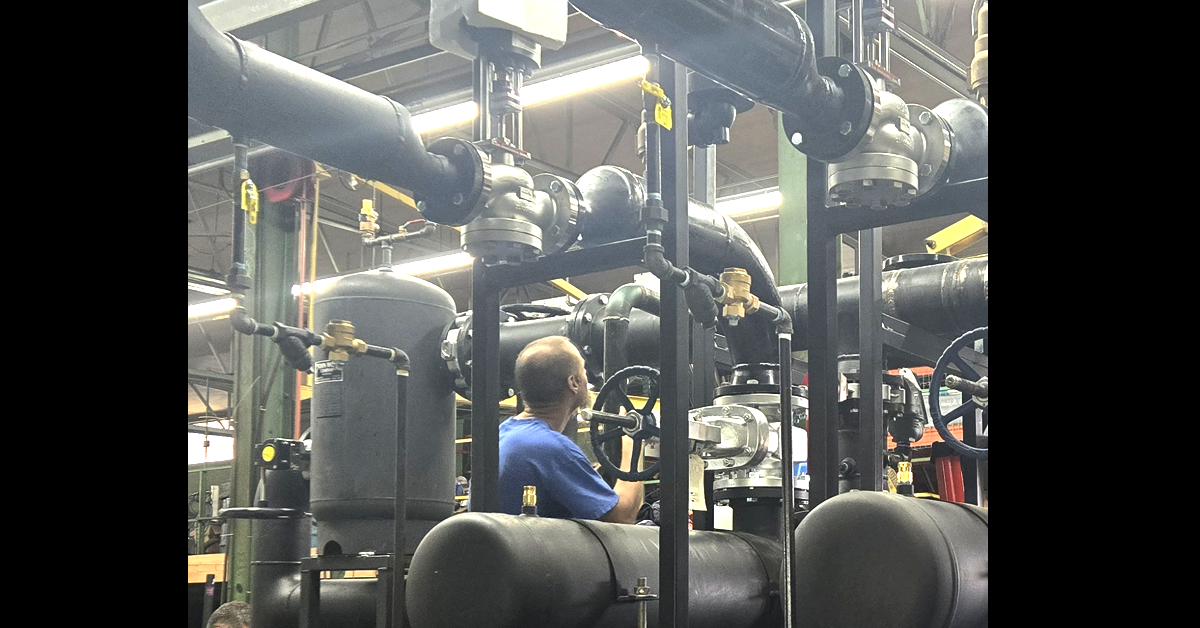
The distribution header is the element of the packaged boiler room that most constrains future expansion if it is not sized for growth at the original design. A supply and return header sized exactly for the current boiler plant flow cannot accept an additional boiler’s flow without being replaced. A header sized for the planned expansion capacity accepts the additional boiler connection when the time comes without structural modification.
The incremental cost of sizing the distribution header for a larger capacity at the original fabrication is modest relative to the total system cost. The cost of replacing an undersized header in a mechanical room that is already occupied by the original packaged system is not modest. It requires draining the system, disconnecting the existing boiler connections, removing and replacing the header, and reconnecting everything, all in a mechanical room where the original system is now in the way.
For expansion planning, FabPro designs the distribution header with capped and flanged connection points for future boiler and pump connections. The caps are pressure-rated and insulated at the original fabrication. Adding the next boiler involves removing the cap, making the boiler connections to the prepared flange, and commissioning the new unit. The mechanical room work required to add a boiler to a system designed for expansion is substantially less than the work required to add a boiler to a system that was not.
Structural base and footprint planning
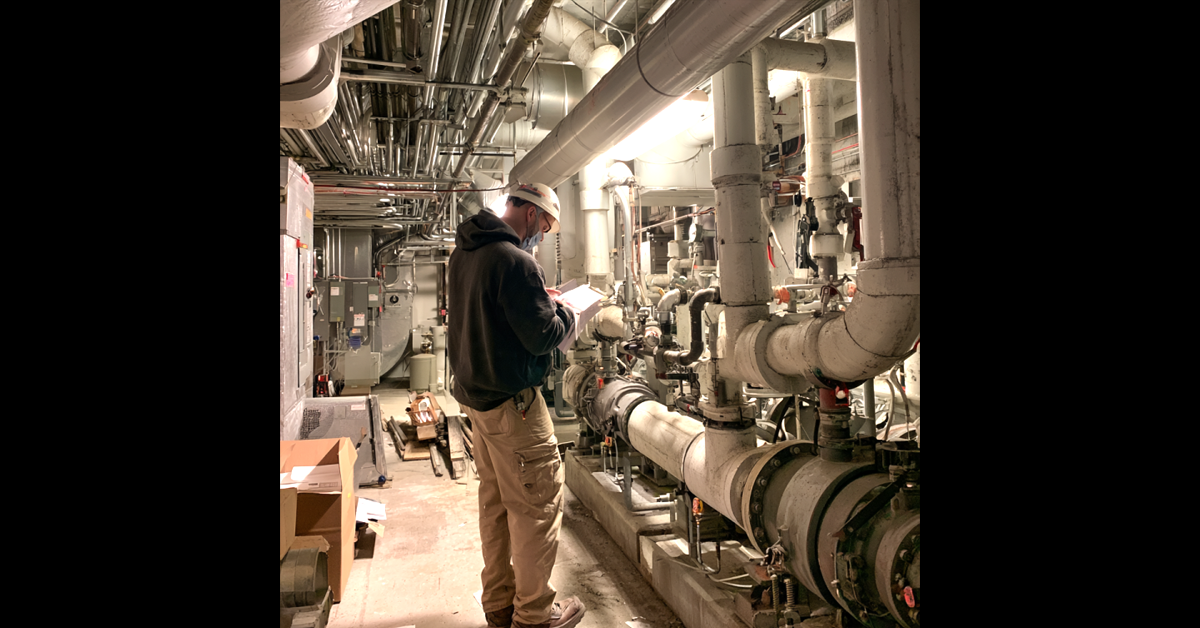
The structural base of a packaged boiler room defines the footprint the system occupies in the mechanical room. A base sized for the current equipment load with no provision for additional equipment forces any expansion onto a separate base that may not coordinate well with the original system’s piping and electrical layout.
A modular structural base design divides the system into bays that can be extended when additional equipment is added. The original system occupies the first bay or bays. The adjacent floor area is kept clear of permanent obstructions that would prevent the next bay from being set beside the original. When the expansion happens, the new bay sets beside the original, connects to the prepared header connection points, and ties into the electrical and controls infrastructure that was sized and roughed in for the full expanded plant.
For mechanical rooms where the floor area is genuinely constrained, the expansion planning conversation during design identifies whether the constraint prevents a modular expansion approach entirely or whether it can be accommodated with a different equipment arrangement in the original package. A system that discovers the expansion constraint at the time the expansion is needed is making that discovery at the worst possible time.
Electrical and controls infrastructure for expansion
The electrical service panel and the controls system for a packaged boiler room represent infrastructure investments that can be sized for the expanded plant at the original installation at a modest incremental cost. A panel sized for the current motor loads with circuit breakers and wire runs added for future equipment avoids the cost of a panel replacement or addition when the expansion happens. A controls system with expansion capacity in the PLC, the operator interface, and the BAS integration avoids a controls upgrade that would otherwise be required to incorporate the additional equipment.
For the boiler sequencing controls, the Hurst master boiler control and the Viessmann cascade controller both support the addition of boilers within their designed capacity ranges without a controller replacement. For applications where a specific controls platform has been specified, FabPro coordinates the controls architecture with the equipment manufacturer’s documentation during the original design to confirm that the expansion scenario is within the controller’s capability.
For BAS integration, the point count expansion associated with adding a boiler to an existing plant is documented during the original design so that the BAS contractor knows the future integration scope. A BAS that was integrated at the original installation with no provision for expansion points requires a change order to the controls contractor when the expansion happens. A BAS integrated with reserved points for the planned expansion scope does not.
Communicating the expansion plan
The modular expansion design is only useful if the facility team and the mechanical contractors who will perform the future expansion work know that the provisions exist and where they are. FabPro documents the expansion provisions in the project handoff package: the capped header connections, the spare panel circuits, the reserved BAS points, and the floor area kept clear for the next bay. That documentation needs to survive the turnover from the contractor who installed the original system to the facility staff and contractors who will manage the mechanical room for the next decade.
For boiler plants where GP Energy Products equipment is the basis of the expansion plan, the GP Energy team handles the additional boiler selection and can coordinate the commissioning of the expanded plant with FabPro. Visit gpenergyproducts.com for more. For pump systems where additional pumps are part of the expansion scope, the Merion Pump Company team handles the pump selection and can coordinate the staging logic with the expanded boiler plant controls. Visit merionpump.com for more.
FabPro Systems designs and fabricates custom packaged boiler rooms and mechanical systems for commercial, institutional, and industrial applications nationally. If your current project has a load growth scenario that will require additional mechanical capacity in the future, reach out during the design phase and we will build the expansion provisions into the original system.
References
1. ASHRAE. HVAC Systems and Equipment Handbook, Chapter on Boilers. Covers multi-boiler plant design, staging controls, and expansion planning for commercial and institutional applications. ashrae.org
2. ASME B31.3. Process Piping Code. Covers design and construction requirements for packaged piping systems including header sizing and future connection provisions. asme.org
3. NFPA 70. National Electrical Code. Covers electrical panel sizing, spare circuit provisions, and wire sizing requirements applicable to packaged mechanical system electrical infrastructure. nfpa.org
4. ASHRAE. Commissioning Process for Buildings and Systems, Guideline 1.1. Covers documentation requirements for packaged systems including expansion provision documentation in the project handoff package. ashrae.org




Leave A Comment