
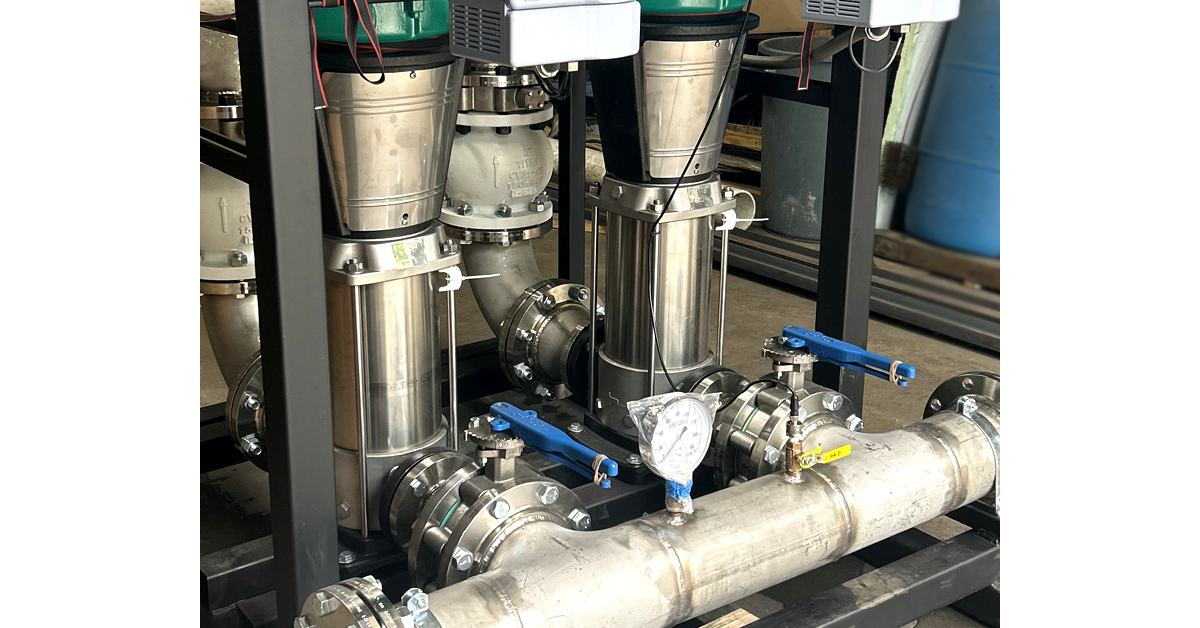
Factory tested is a phrase that appears in a lot of packaged mechanical system proposals. It is also a phrase that means very different things depending on who is using it. For some fabricators, factory tested means the system was powered on and nothing immediately failed. For others it means a systematic verification process that produces documented results the commissioning agent can actually use.
The difference between those two interpretations shows up during commissioning, when the startup team either has a documented baseline to work from or is discovering how the system behaves for the first time with the installation team standing around waiting.
This article describes what factory testing actually involves at FabPro. Not as a marketing claim but as a process description that engineers, project managers, and commissioning agents can use to understand what documentation travels with a FabPro system and what it represents.
Why factory testing matters
A packaged mechanical system leaves the factory and arrives on a job site where it will be installed by a crew that did not build it, commissioned by an agent who did not design it, and operated by a facility team that may not have been involved in either process. The factory test documentation is the record that connects what the system was designed to do, what was verified before it shipped, and what the commissioning agent should expect to confirm when it starts up.
Without that documentation, the commissioning process is a discovery exercise. The startup team learns how the system behaves by running it and observing the results. Problems that were present before the system shipped are discovered during commissioning, at a point where the remediation options are more limited and more expensive than they would have been at the factory.
With solid factory test documentation, the commissioning process is a verification exercise. The startup team confirms that the system performs in the installed configuration the way it performed in the factory. Deviations from the factory baseline are the signal that something in the field installation needs attention. That is a much more efficient use of commissioning time and a much lower-risk startup process.
Pressure testing
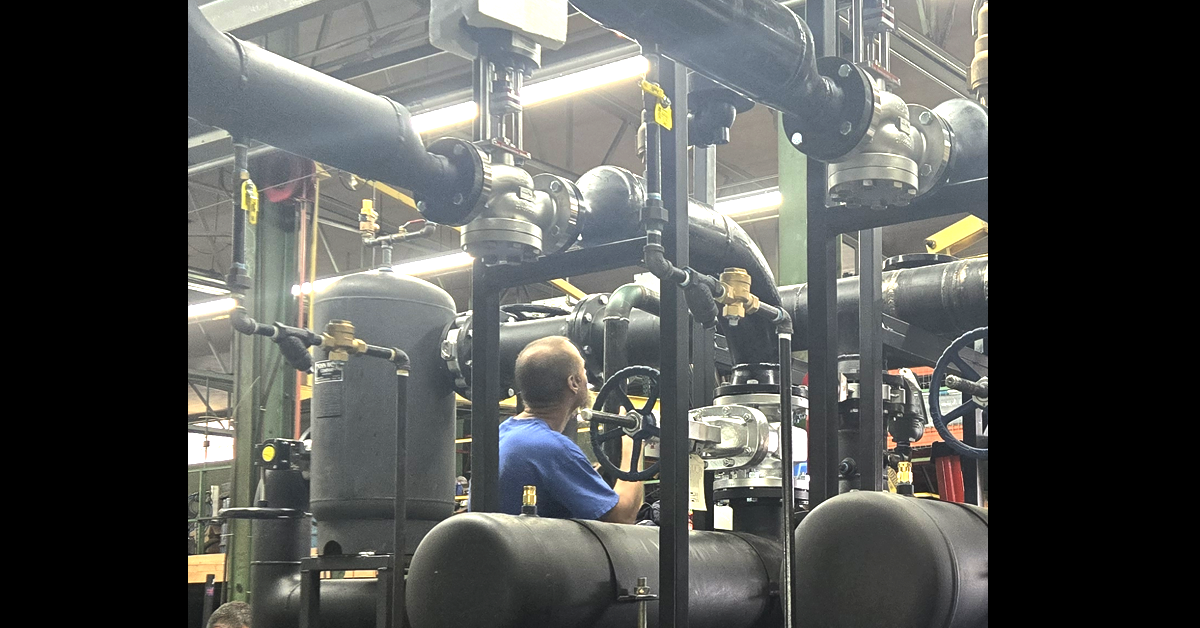
Every FabPro system that includes pressure piping undergoes a hydrostatic pressure test before anything else is connected or tested. The test pressure is applied to the fully assembled piping system, held for a defined time period documented in the test record, and the system is inspected for leaks at every joint, fitting, and connection while under pressure.
The test pressure exceeds the system’s maximum allowable working pressure by the margin required by ASME B31.3 for the piping class and service conditions of the system. The hold time and the inspector’s signature are recorded on the pressure test certificate that travels with the system.
A system that has been hydrostatically tested at the factory arrives on site with documented evidence that every piping joint holds pressure under conditions that exceed normal operating pressure. The field installation team makes the final connections to the building infrastructure. The commissioning agent confirms those field connections hold pressure. The internal piping of the system is already verified.
Alignment verification
Every rotating component in a FabPro system, pumps, motors, and any other coupled rotating equipment, has its alignment verified and documented before the system ships. Alignment is measured using laser alignment tools and the readings are recorded in the alignment certificate that travels with the system.
Misalignment between a pump and its motor is one of the primary causes of premature bearing failure and mechanical seal leakage. A system that leaves the factory with documented alignment readings gives the commissioning agent a baseline. If vibration or noise develops after installation, the alignment documentation is the starting point for determining whether the problem originated before or after the system left the factory.
For systems that are shipped on structural bases that may flex during transport, the alignment should be verified after the skid is set and grouted in its final location. The factory alignment documentation establishes the baseline. The post-installation alignment check confirms the system was not disturbed during shipping and installation.
Controls verification
The controls verification process cycles the system through its full sequence of operations before it ships. Every operating mode that the system is designed to execute is tested. Every alarm condition is triggered and confirmed to produce the correct response. Every fault condition is simulated and the fault response is verified and documented.
For systems with variable speed drives, the drive programming is verified against the sequence of operations document before the system ships. For systems with building automation system interfaces, the communication protocol and signal mapping are confirmed to match the project specifications.
The controls verification record documents what was tested, the conditions under which it was tested, and the observed results. For commissioning agents who need to confirm that the sequence of operations was implemented correctly, the factory controls verification record is the reference document that shows what was verified before the system left the fabrication shop.
Electrical sign-off
Every electrical termination in the system is verified before the system ships. The verification confirms that every wire is terminated at the correct point, that the termination is mechanically secure, and that the circuit functions as designed. The single-point power connection is confirmed to be correctly configured for the voltage, phase, and amperage specified in the project documentation.
The electrical sign-off record documents every circuit that was verified and the technician who performed the verification. For the commissioning agent, the electrical sign-off record establishes that the internal wiring of the system was verified at the factory. The field electrical work, which is limited to the single-point power connection and the building automation system interface, is verified during commissioning.
Functional run test
Where the application permits, FabPro performs a functional run test of the complete system before it ships. The run test operates the system at or near design conditions and records flow rates, pressures, temperatures, and motor amperage against the design values specified in the project documentation.
The run test is the closest the factory process comes to replicating what the commissioning agent will confirm on site. A system that produces design flow and pressure at the factory, with motors drawing expected amperage and controls responding correctly, is a system that should perform the same way when it is installed and connected to the building infrastructure.
Not every application permits a full functional run test at the factory. Systems that require specific process fluids, systems that are too large to fill and run in the fabrication shop, and systems where the design conditions cannot be replicated without the building infrastructure are tested to the extent that factory conditions allow. The test record documents what was tested and what was not, so the commissioning agent knows exactly what the factory verification covered.
What ships with the system
Every FabPro system ships with a documentation package that includes the pressure test certificate with hold times and inspector signature, the alignment certificates for every rotating component, the controls verification record, the electrical sign-off record, and the functional run test results where applicable. The documentation package also includes the as-built drawings, the equipment submittals for every major component, the sequence of operations document, and the operation and maintenance manuals.
The commissioning agent receives the documentation package before the system arrives on site. The startup process begins with a review of what was verified at the factory, not a cold start with no baseline.
For projects where the FabPro system is connected to a GP Energy Products boiler plant, the factory test documentation and the boiler startup records together provide a complete picture of the mechanical system’s verified performance before the building is occupied. Visit gpenergyproducts.com for more on GP Energy’s commercial boiler startup and service capabilities. For systems that include Merion Pump Company pump equipment, the factory alignment and run test records for those pumps are part of the documentation package. Visit merionpump.com for more on Merion’s commercial pump capabilities.
FabPro Systems designs and fabricates custom packaged mechanical systems for commercial, institutional, and industrial applications nationally. If you have a project in development and want to understand what the factory testing process covers before the specification is written, reach out and we will walk through the test protocol for the specific system you are considering.
References
1. ASME B31.3. Process Piping Code. Governs hydrostatic pressure testing requirements for process piping systems including hold times and test pressures. asme.org
2. Hydraulic Institute. Pump Installation, Operation, and Maintenance Standards. Covers alignment requirements and verification procedures for centrifugal pumps in packaged systems. pumps.org
3. NEMA. Standards for Industrial Controls and Systems. Covers wiring, termination, and electrical verification requirements for industrial control panels. nema.org
4. ASHRAE. Commissioning Process for Buildings and Systems, Guideline 1.1. Covers the relationship between factory testing documentation and field commissioning. ashrae.org



Leave A Comment