Most mechanical system replacement projects are specified component by component. The boiler engineer selects the boiler. The mechanical engineer selects the pumps. The coil fabricator receives a replacement specification. The controls contractor programs the sequence of operations. Each discipline does its work correctly within its own scope, and the coordination between those scopes happens in the field during installation and commissioning.
That field coordination is where the problems accumulate. The boiler arrives and the breeching configuration does not match what the piping contractor anticipated. The pump skid dimensions conflict with the clearances the boiler contractor assumed. The coil connections are oriented in a direction that the ductwork contractor cannot accommodate without modification. The controls sequence was written for a system that does not quite match what was actually installed. Each conflict is resolvable, but each resolution takes time, generates change orders, and delays the commissioning schedule.
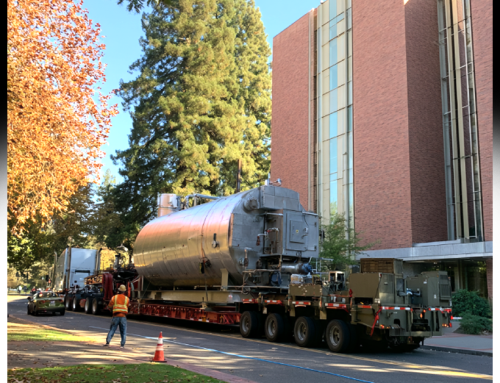
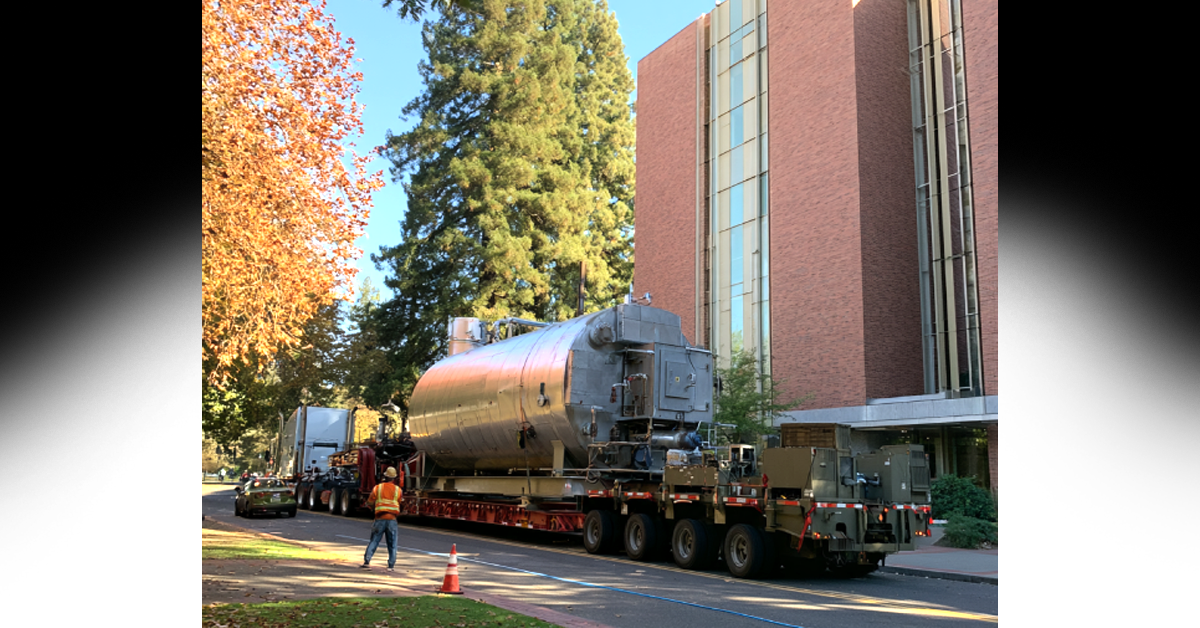
When the full mechanical system is the project, factory assembly offers a fundamentally different approach. The coordination that would otherwise happen between trades in the field happens in the engineering and fabrication process instead. The boiler connection, the pump skid configuration, the coil interface, and the controls integration are resolved before anything ships. The system that arrives on site is a finished product, not a collection of components waiting to be coordinated.
What the full mechanical system actually includes
A complete commercial or industrial mechanical system replacement covers more ground than the primary equipment. The boiler or boilers are the heat source. The pump systems move fluid through the distribution network. The heat exchangers transfer energy between circuits or between the mechanical system and the loads it serves. The controls integrate everything into a sequence of operations that responds to building demand, sequences multiple pieces of equipment correctly, and communicates with the building automation system.
Supporting systems add to the scope. Feedwater handling for steam applications. Chemical feed for water treatment. Expansion tanks and pressure management for hydronic systems. Condensate return for steam plants. Blowdown systems for boiler water management. Each of these supporting systems has its own connection requirements, its own maintenance access requirements, and its own integration points with the primary equipment.
When all of those systems are specified independently and installed by separate trades, the integration points are field coordination problems. When they are designed together as a factory-assembled package, the integration points are engineering decisions made before fabrication begins.
How the four GP Energy Products Group brands come together on a full system project
GP Energy Products Group is positioned to support the full mechanical system conversation across all four brands, and a large commercial or industrial mechanical system replacement is where that positioning has the most direct value.
GP Energy Products handles the boiler plant. The Hurst Series 500 four-pass wetback Scotch Marine boiler, the Unilux watertube for large capacity or high-temperature applications, Sellers Manufacturing for industrial steam, and the full GP Energy service and rental capabilities for projects that need temporary heat during the transition. The boiler selection, the breeching and stack design, the safety control specification, and the startup and commissioning support all sit with the GP Energy team. Visit gpenergyproducts.com for more on GP Energy’s commercial and industrial boiler capabilities.
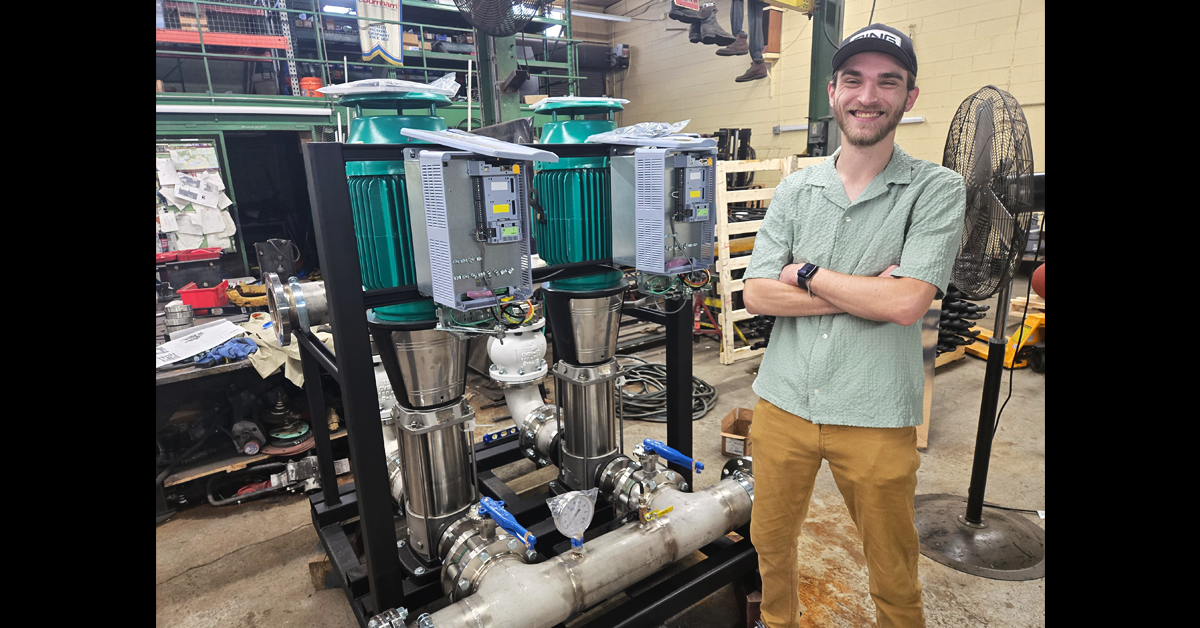
Merion Pump Company handles the pump systems. The primary and secondary pumps serving the boiler plant and the distribution system. The booster systems for domestic water applications in the same building. The variable speed drives and controls that match pump output to actual system demand. The Wilo Stratos GIGA2.0-I for large commercial HVAC applications, the new MVI for high-pressure multistage applications, and the full Merion pump service and repair capability for systems that are being replaced rather than upgraded. Visit merionpump.com for more on Merion’s commercial pump capabilities.
HX Coils handles the heat transfer surfaces. Replacement coils for air handling units in the distribution system. Custom tube bundles for process heat exchangers. High-temperature hot water coils for HTHW distribution systems. Face and bypass coils for precision temperature control applications. The coil specification reviews the current system conditions before fabrication begins, and the documentation package that ships with the coil supports the commissioning process. Visit hxcoils.com for more on HX Coils’ custom coil fabrication capabilities.
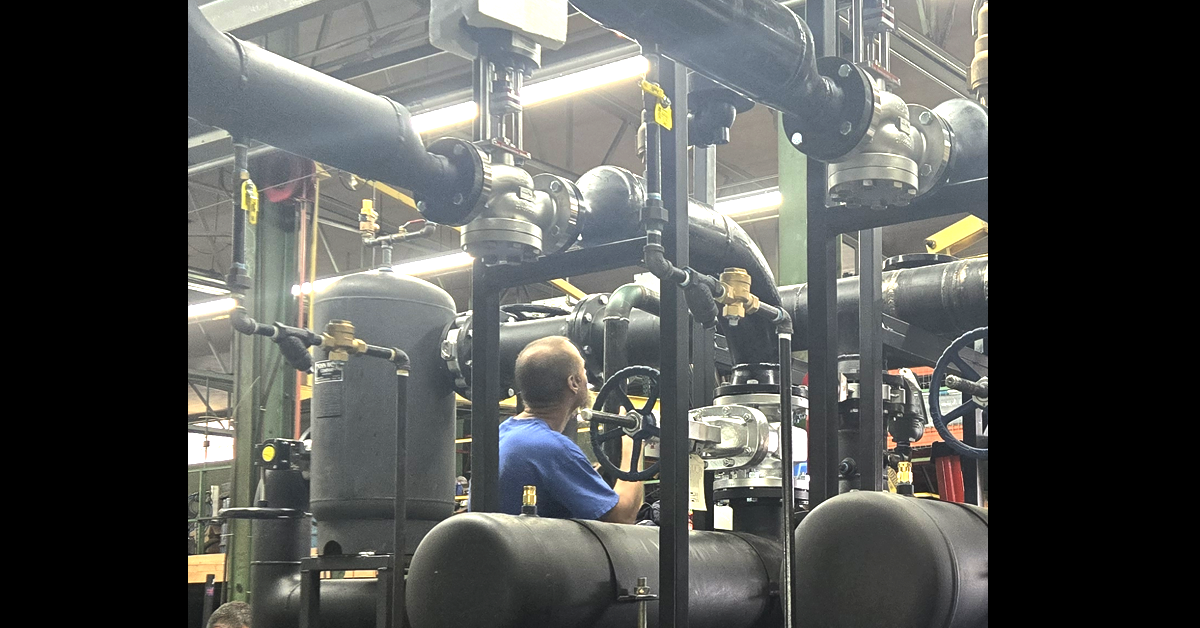
FabPro Systems brings it together. The factory-assembled package that integrates the boiler connections, the pump skids, the heat exchanger interfaces, the chemical feed systems, the controls wiring, and the single-point utility connections into a system that can be placed, connected, and commissioned without the field coordination problems that component-by-component installation produces.
What factory assembly changes about the commissioning process
The commissioning process for a factory-assembled full mechanical system is a confirmation exercise rather than a discovery process. The system has been run at the factory. The pumps have been confirmed to deliver design flow and pressure. The controls have been cycled through the full sequence of operations including startup, normal operation, staging transitions, alarm conditions, and fault switchover. The electrical connections have been verified. The piping has been pressure tested with documented hold times.
When the commissioning agent arrives on site, they are working from a documented baseline. The factory test records show what the system did in the controlled environment of the fabrication shop. The field commissioning confirms that the system performs the same way in the installed configuration. Deviations from the factory baseline are the signal that something in the field installation needs attention, rather than a first discovery of whether the system works at all.
For large commercial and industrial projects where the commissioning schedule is driven by the overall construction timeline, the compressed commissioning process that a factory-tested system enables is a meaningful schedule advantage. The building can be occupied, the tenant can move in, or the production line can start up sooner because the mechanical system commissioning is not the critical path item it would be with a field-assembled equivalent.
When to bring FabPro into the conversation
The earlier FabPro is in the project conversation, the more the factory assembly approach can contribute. A full mechanical system replacement that is designed around the factory assembly model from the start produces a fundamentally different project than one where factory assembly is considered after the component specifications are already locked.
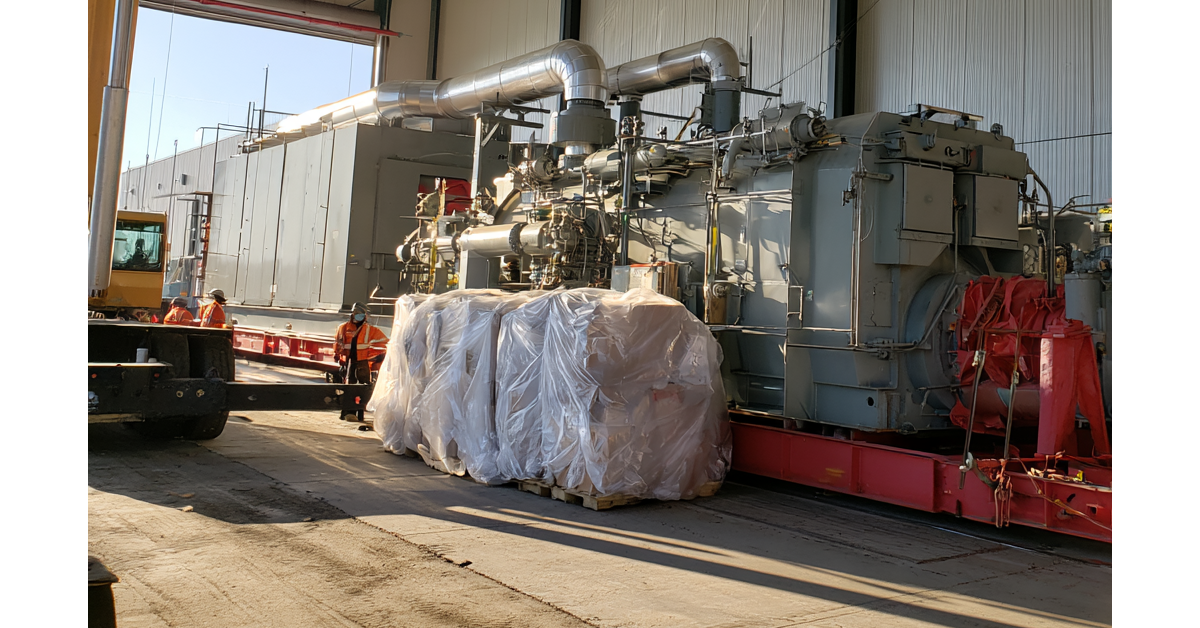
Early involvement allows FabPro to coordinate the connection configurations between the boiler, the pump skids, and the heat exchangers before the drawings are finalized. It allows the shipping and rigging logistics to be resolved before the mechanical room access is a constraint. It allows the controls integration to be designed into the factory-assembled system rather than added in the field. And it allows the commissioning scope to be defined in coordination with the factory test protocol so the two processes are complementary rather than redundant.
If you have a commercial or industrial mechanical system replacement in development and want to evaluate what the factory assembly approach would add to the project, reach out to the FabPro team before the specification is finalized. Bring in the GP Energy team for the boiler conversation, the Merion team for the pump selection, and the HX Coils team for the heat transfer surfaces. One project. One team. One call.
References
1. ASME B31.3. Process Piping Code. Governs pressure testing and fabrication requirements for packaged piping systems. asme.org
2. ASHRAE. Commissioning Process for Buildings and Systems, Guideline 1.1. Covers factory testing documentation and its relationship to field commissioning. ashrae.org
3. NFPA 85. Boiler and Combustion Systems Hazards Code. Covers safety requirements applicable to factory-assembled boiler room packages. nfpa.org
4. Hydraulic Institute. Pump System Optimization Guide. Covers pump selection and system design for integrated mechanical system applications. pumps.org



Leave A Comment