
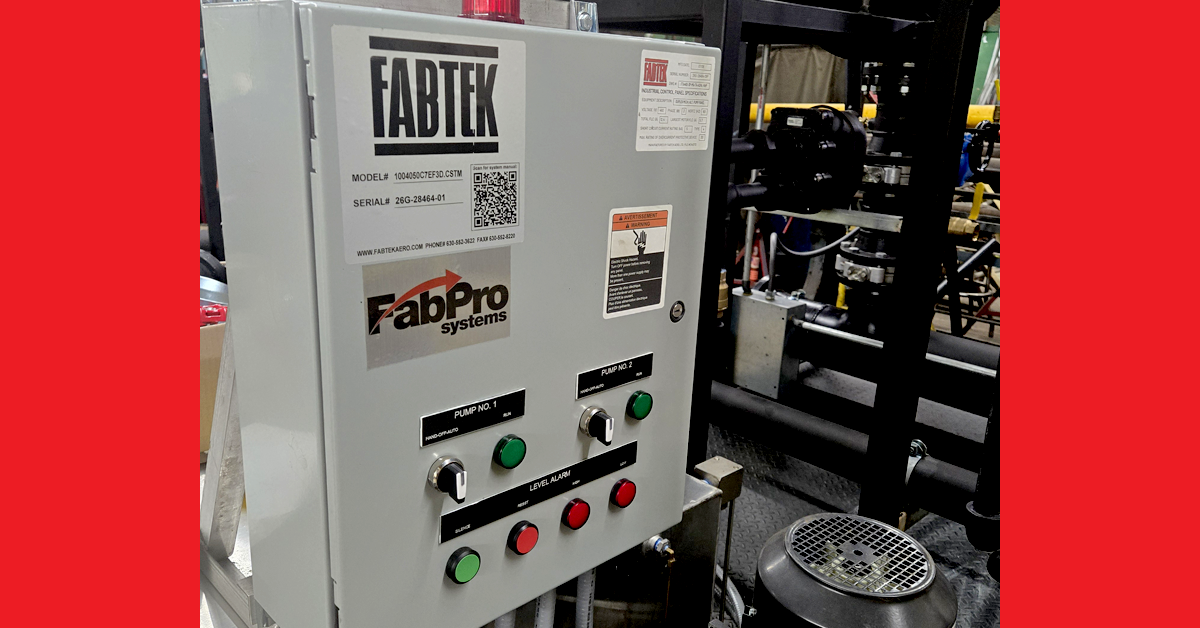
Variable flow only saves energy if the pumps, drives, and sensors are set up to work together. A pump system that is specified correctly on paper can still disappoint when the drive is configured in the field by someone seeing the system for the first time. Building the pump skid in the shop moves that work to a controlled setting, where it can be wired, configured, and tested before anything reaches the site.
This article covers what goes into a variable flow pump skid, where the controls live, and what gets checked before it ships.
What a variable flow skid is
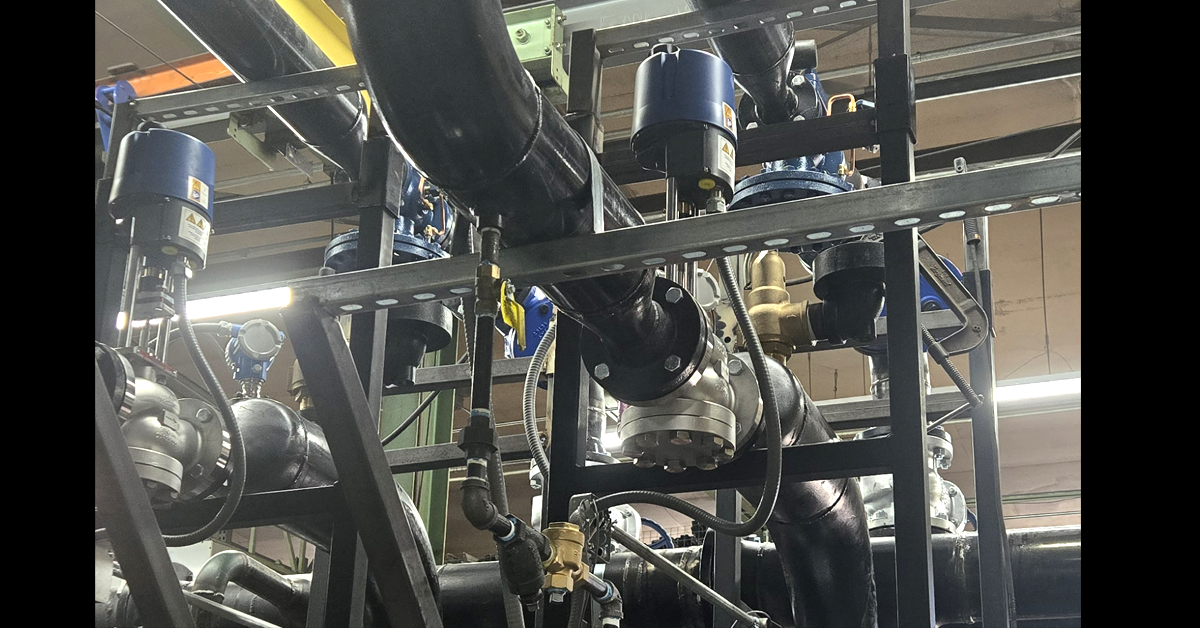
A variable flow skid carries the pumps and the equipment around them on a single structural base. That typically includes two or more pumps, isolation and check valves, strainers, and the piping that connects them. Where the project calls for it, it also includes the variable speed drives, the controls panel, and the instrumentation wiring. FabPro fabricates skids to the engineer’s specification, so the exact contents follow the drawings.
Putting all of that on one base means the field work is a set of connections rather than an assembly. The installer connects supply, return, power, and communication, and the skid has already been fit up and tested.
Drives and controls: two common approaches
The first approach uses external variable frequency drives, one per pump, mounted in the controls panel on the skid. The panel holds the drives, the pump controller or PLC, the breakers, and the terminal blocks. All wiring between the drives and pump motors is done in the shop.
The second approach uses pumps with integrated drives, which are common in ECM pumps. The drive is part of the pump, so the panel is simpler, and the skid carries power distribution and communication wiring rather than a bank of drives. Which approach fits depends on pump size and the owner’s preferences, and the specification should state which is expected. The panel standard applied to the skid, such as UL 508A, should also be stated at specification, not discovered at delivery.
The sensor that does not ship on the skid
Variable flow control depends on a differential pressure signal. The best place for that sensor is at the most remote terminal unit, not at the pump, because a sensor near the pump makes the system run at a higher pressure than the farthest load needs and wastes the savings. That means the sensor is usually installed in the field, far from the skid.
What the skid can do is make it easy. Pre-wired terminals for the sensor signal, clear labeling, and documentation of the control sequence mean the field wiring is a short, well-defined task. Make sure the specification says where the sensor goes, and who supplies and wires it.
Sequence of operation
The skid’s controls are only as good as the sequence they run. A typical sequence includes lead and lag pump staging, alternation to equalize run time, a minimum flow condition, and alarms for pump failure and loss of signal. If the system has an N plus 1 requirement, the sequence needs to account for it, including what happens when one pump is out of service. Building automation integration, usually BACnet or Modbus, should be defined before the panel is built so the points are mapped in the shop.
What gets checked before it ships
FabPro’s factory testing includes hydrostatic pressure testing, alignment verification, controls cycling, electrical sign-off, and a functional run where the application allows. For a variable flow skid, controls cycling is where the system is exercised the way it will operate: the drives ramp, the pumps stage, the alarms trip and reset, and the communication points respond. Problems found there get corrected in the shop.
The documentation travels with the skid, including the factory test records, the wiring diagrams, and the sequence of operation. That is what a commissioning agent needs to verify the system in the field.
Plan for the incentive
Pennsylvania electric utilities pay incentives for variable speed drives on variable flow systems, and those programs generally require approval before purchase. If the skid is part of a 2027 plan, ask about the incentive early. The Merion Pump Company article published today covers the PECO and PPL programs in detail.
For pump selection on a variable flow skid, the Merion Pump Company team can help with sizing and the drive approach. Visit merionpump.com for more. For boiler plants served by the pump skid, the GP Energy Products team handles boiler selection and service. Visit gpenergyproducts.com for more. For coils served by the system, HX Coils fabricates custom replacement coils. Visit hxcoils.com for more.
References
1. Hydraulic Institute. Pump system standards and guidance. Covers variable speed pumping system design and operation. pumps.org
2. ASHRAE. HVAC Systems and Equipment Handbook, Chapter on Pumps. Covers variable flow hydronic system design and pump control. ashrae.org
3. UL Standard 508A. Standard for Industrial Control Panels. Covers requirements commonly applied to control panels on packaged skids. ul.com
4. ASME B31.9. Building Services Piping. Covers the design and fabrication of building services piping systems. asme.org







Leave A Comment