
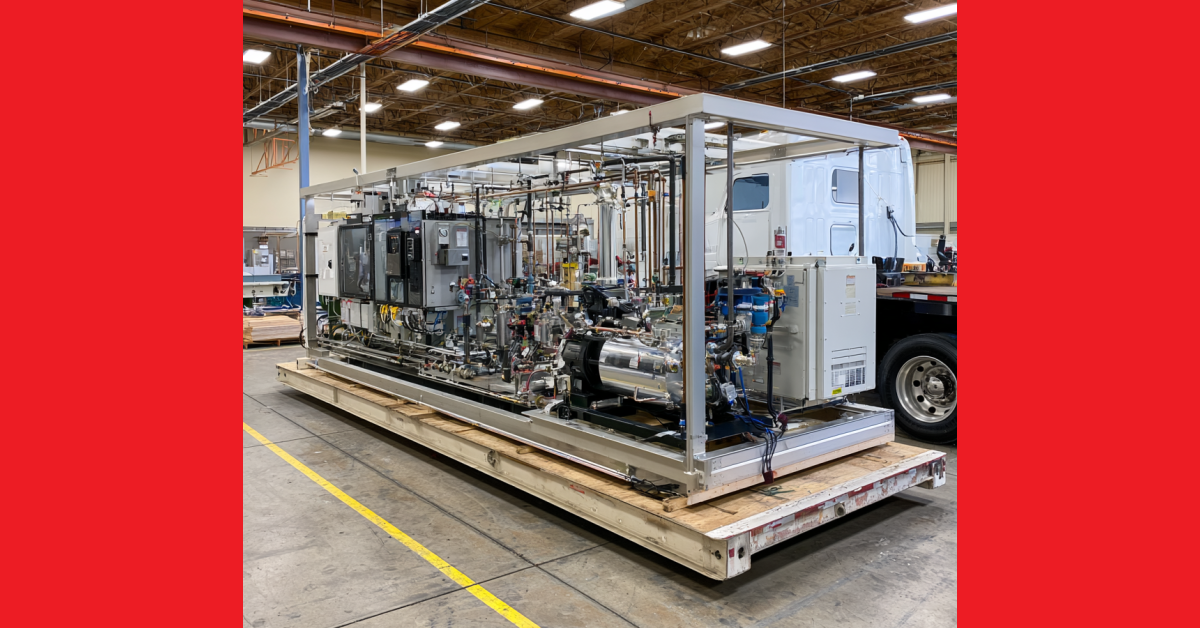
Most packaged mechanical system conversations start with a single piece of equipment. A pump skid. An outdoor enclosure. A heat exchanger package. The scope is defined, the application is specific, and the factory assembly advantage is clear.
Then there are the projects where the boiler room itself is the scope. The entire mechanical plant needs to be replaced or built from scratch. New boilers, new pump systems, new heat exchangers, new controls, new piping headers, new chemical feed, new expansion tanks. The list keeps growing and at some point someone has to figure out how all of it comes together as a system rather than as a collection of separately specified components.
That is where the packaged boiler room approach earns its place.
What a packaged boiler room actually includes
A factory-assembled boiler room package is not just a boiler on a skid. It is the full system that supports the boiler plant, engineered and assembled together before anything arrives on site.
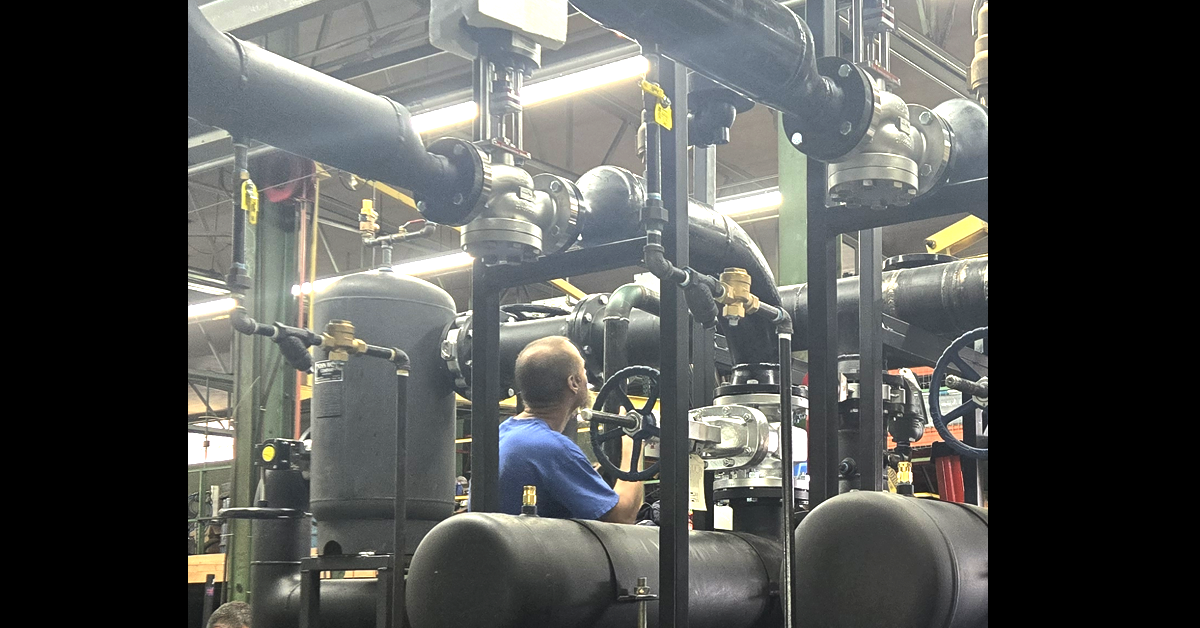
The boiler connects to a header system that distributes flow to the building. The header connects to the pump plant, which includes the primary and secondary pumps, the variable speed drives, the controls, and the isolation and balancing valves. The chemical feed system ties into the feedwater makeup. The expansion tank connects to the system at the right pressure point. The controls integrate the boiler sequencing, the pump staging, and the building automation interface. All of it is piped, wired, tested, and documented in the factory.
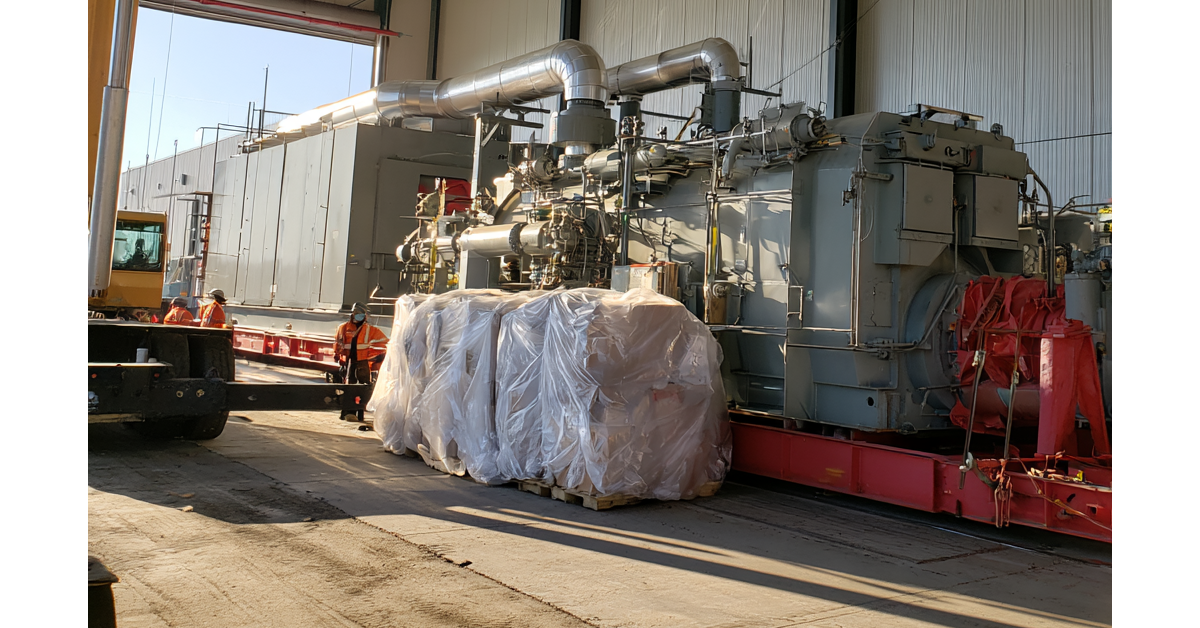
When the installation team arrives on site, they are connecting a finished system to the building infrastructure, not assembling a boiler room from components. The difference in installation time, coordination complexity, and commissioning risk is significant.
Why factory assembly matters more at boiler room scale
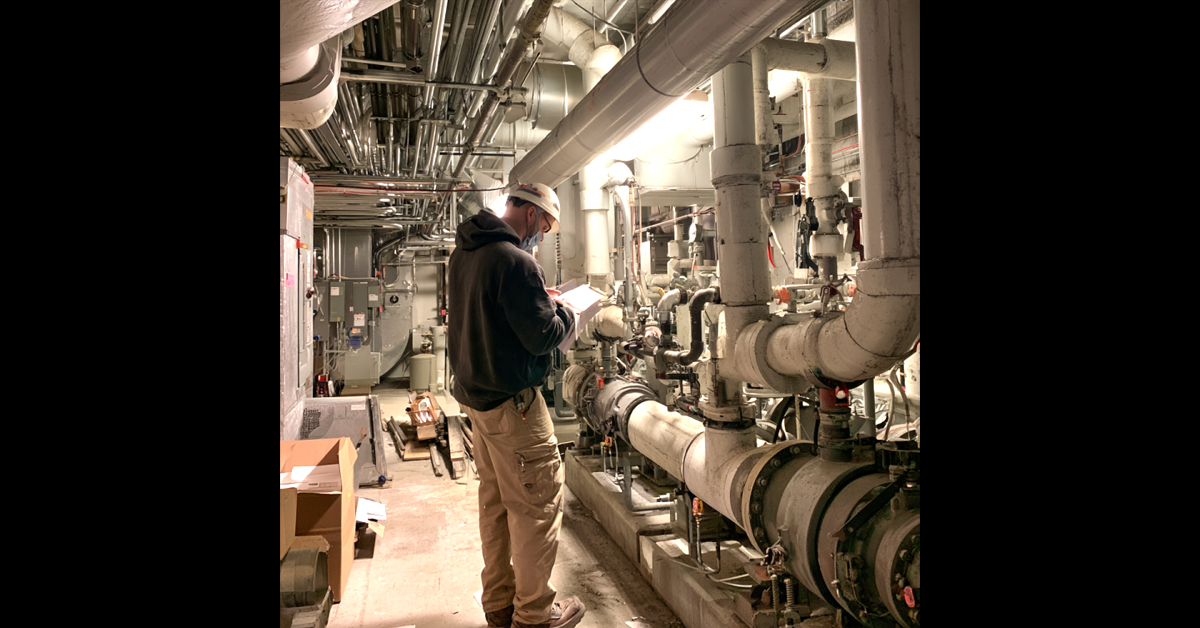
Field assembly of a complete boiler room requires multiple trades working in a confined space over an extended period. The boiler contractor, the piping contractor, the controls contractor, and the electrical contractor all need to coordinate their work in a sequence that makes sense, in a space that is not designed to accommodate all of them simultaneously. Change orders accumulate. Schedule slips. Commissioning discovers conflicts between systems that were specified independently and never fully coordinated.
Factory assembly compresses all of that into a single fabrication process. The coordination happens at the design stage, in the factory, where changes cost much less than they do on site. The system that ships is the system that was designed, tested, and verified. The commissioning process is a confirmation rather than a discovery.
What FabPro needs to make it work
The earlier the conversation happens, the better the result. A packaged boiler room design that starts with the application, the building load, the utility connections, the available footprint, and the performance requirements produces a different system than one that starts with a boiler spec and works backward.
For projects that include large commercial or industrial boilers, the GP Energy Products team handles the boiler selection including the Unilux watertube line for applications that require high capacity or high-temperature hot water. For the pump systems inside the packaged boiler room, the Merion Pump Company team handles pump selection and system design. Visit gpenergyproducts.com and merionpump.com to learn more.
References
1. ASME B31.3. Process Piping Code. Governs pressure testing and fabrication requirements for packaged piping systems. asme.org
2. ASHRAE. Commissioning Process for Buildings and Systems, Guideline 1.1. Covers factory testing documentation and field commissioning. ashrae.org
3. NFPA 85. Boiler and Combustion Systems Hazards Code. Covers safety requirements for boiler plant installations. nfpa.org



Leave A Comment