
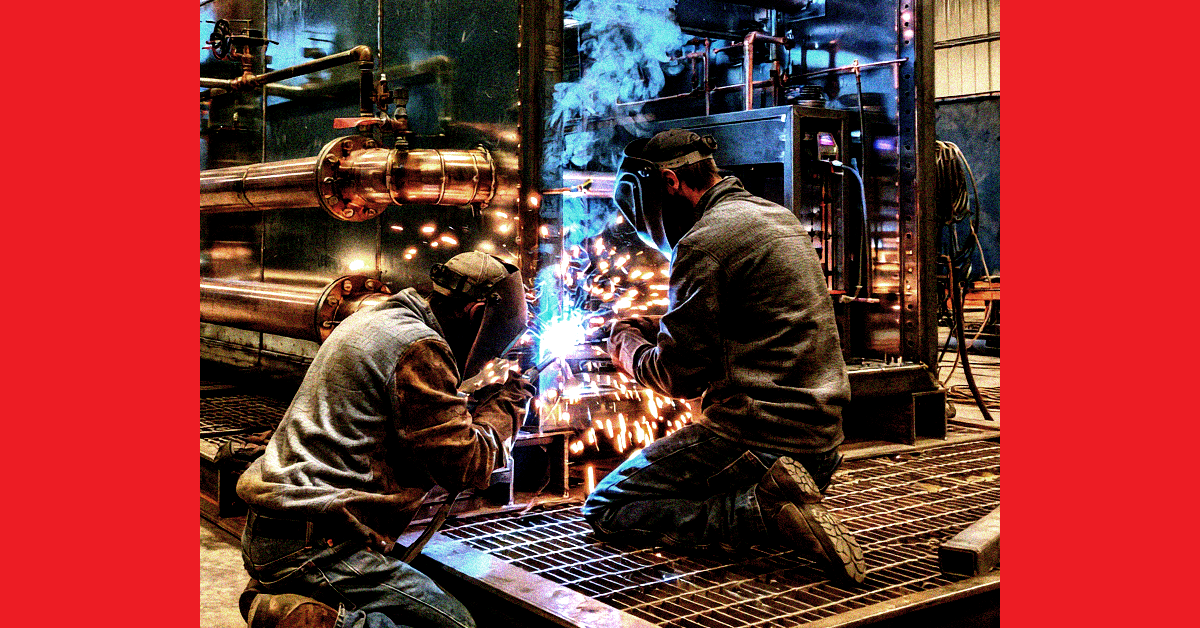
Condensing boiler replacements are more complex than conventional boiler replacements. The efficiency gains are real and the operating cost savings are meaningful, but the installation requirements that make a condensing boiler perform correctly are more demanding than what most conventional boiler replacements involve. Venting that handles positive pressure and condensate. A condensate neutralization system that manages acidic discharge. Return water piping that keeps temperatures low enough to allow condensation to occur. Controls that integrate with the building automation system and sequence correctly with the distribution pumps.
Each of those requirements is manageable in isolation. Together, in a mechanical room where multiple trades are coordinating around each other’s schedules, they create a level of installation complexity that produces callbacks and commissioning problems at a rate that straightforward fire tube replacements do not.
Factory assembly addresses that complexity before anything arrives on site.
What makes condensing boiler installation different
The venting requirement is where most condensing boiler installations diverge most sharply from conventional replacements. A conventional Category I boiler vents through existing masonry or Type B vent that may already be in place. A condensing boiler operates as a Category IV appliance, producing flue gases under positive pressure that can contain condensate. The venting system needs to be rated for positive pressure, sealed at every joint, pitched correctly for condensate drainage, and fabricated from materials that resist acidic condensate, typically AL29-4C stainless steel or polypropylene depending on temperature.
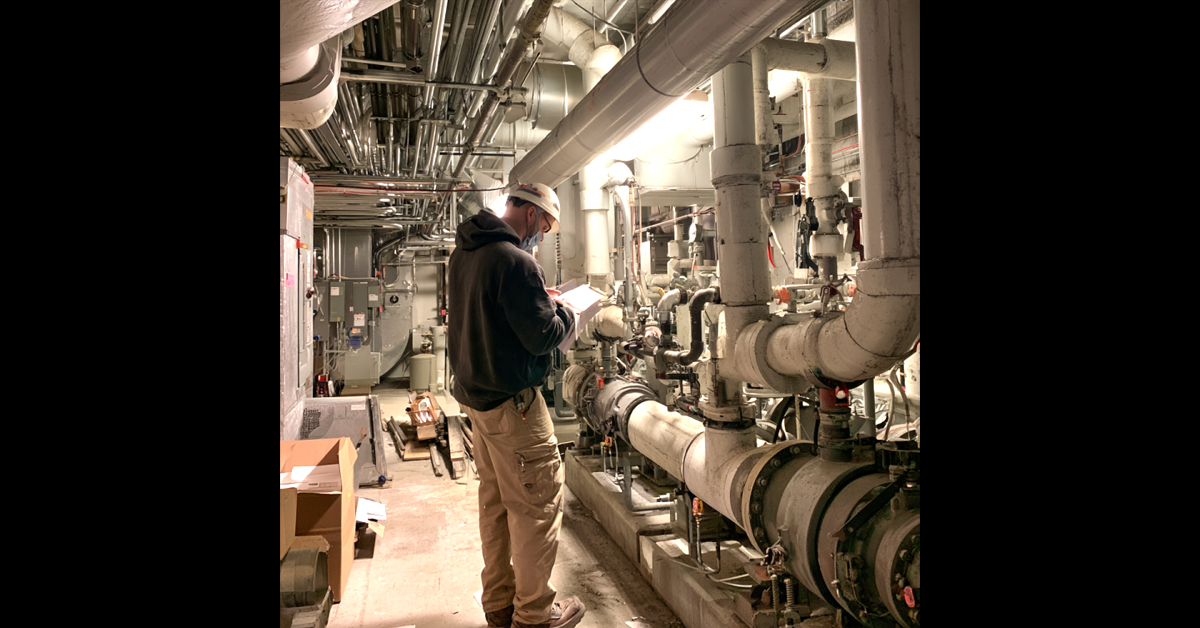
In a retrofit application, the existing venting almost never meets Category IV requirements. The venting replacement is a significant portion of the total installation scope and needs to be coordinated with the boiler placement, the condensate drain, and in many cases the building exterior penetration.
Condensate neutralization is required wherever the condensate drain from the boiler connects to the building sanitary system. Condensing boiler condensate is mildly acidic, typically in the pH range of 3 to 5, which is aggressive enough to damage cast iron drain lines over time and may violate local discharge requirements without treatment. A neutralization system, typically a vessel containing limestone chips that raises the pH before discharge, needs to be sized for the boiler’s condensate production rate and integrated into the drain piping before the boiler is commissioned.
Return water temperature management is the third requirement that distinguishes condensing from conventional installation. The boiler needs low return water temperatures to condense effectively. The distribution system design, the pump configuration, and the controls sequence all need to support return temperatures below the condensing threshold. In a retrofit where the existing distribution system was designed for higher temperature operation, modifications to the system or the controls may be required before the condensing boiler can deliver its rated efficiency.
What the packaged approach changes
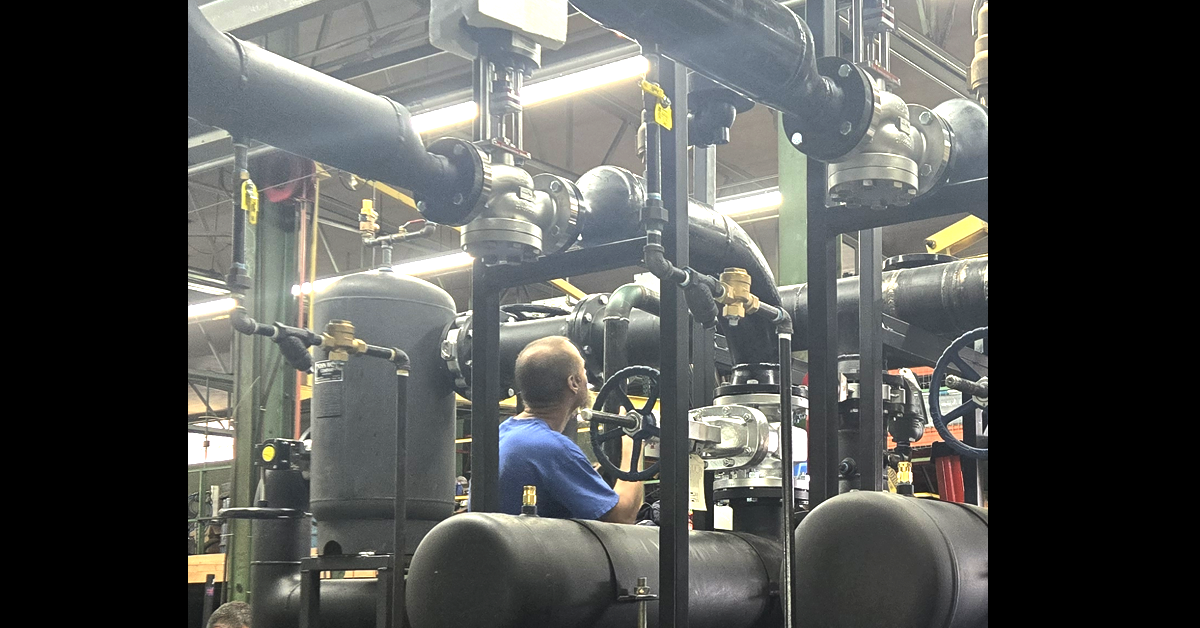
When the condensing boiler installation is approached as a factory-assembled package, the coordination that would otherwise happen between trades on the job site happens in the engineering and fabrication process instead.
The venting system is designed as part of the package. The routing, the materials, the joints, the condensate drainage points, and the exterior penetration configuration are all resolved before fabrication begins. The venting arrives on site as a complete engineered system, not as a field coordination problem.
The condensate neutralization system is integrated into the package. Sized for the specific boiler, plumbed to the condensate outlet, and connected to the drain at defined points. The field work is connecting the drain to the building sanitary system at one location.
The return water piping configuration that supports low-temperature operation is built into the skid. The mixing valves, the temperature sensors, and the controls that manage return water temperature are factory installed, wired, and verified before the system ships.
The controls are integrated and tested. The sequence of operations for condensing boiler operation, including the pump staging logic, the return temperature management, and the building automation interface, is programmed and verified in the factory rather than field-configured during commissioning.
When the installation team arrives on site, the condensing boiler system is a finished product that connects to the building’s utility infrastructure at defined points. The coordination complexity has been resolved. The commissioning process is a confirmation of correct installation rather than a first discovery of how the system is supposed to work.
What this means for the project
The practical benefit is a compressed installation timeline and a more predictable commissioning process. The venting coordination, the condensate system integration, and the controls configuration do not have to happen on the job site. The mechanical contractor makes defined connections. The controls contractor connects the BAS interface. The startup technician confirms the system operates as documented.
For replacement projects where the mechanical room needs to remain operational during the transition, the packaged approach also reduces the time the building is without a functioning boiler plant. The factory-assembled system installs faster than a field-built equivalent, and the reduced commissioning time means the new system is available sooner.
For engineers and owners evaluating a condensing boiler replacement, the packaged approach is worth including in the scope discussion early. The additional engineering and fabrication cost relative to a conventional field installation needs to be weighed against the reduced field labor, the compressed timeline, and the lower risk of commissioning problems that come with a factory-tested system.
For condensing boiler replacement projects that involve the Riello RTC or other commercial condensing boilers available through Merion Pump Company, the FabPro team can coordinate with the boiler supplier on the package design before fabrication begins. Visit merionpump.com for more on Merion’s condensing boiler capabilities. For projects where the condensing boiler replacement is part of a broader boiler plant upgrade, the GP Energy Products team handles the full boiler room conversation. Visit gpenergyproducts.com for more.
FabPro Systems designs and fabricates custom packaged mechanical systems for commercial, institutional, and industrial applications nationally. If you have a condensing boiler replacement in development and want to evaluate what the packaged approach would add to the project, reach out before the scope is finalized.
References
1. NFPA 54. National Fuel Gas Code. Covers venting category requirements for condensing boiler installations including Category IV material and joint requirements. nfpa.org
2. ASME. Boiler and Pressure Vessel Code, Section IV. Governs design and installation requirements for heating boilers including condensing applications. asme.org
3. ASHRAE. Commissioning Process for Buildings and Systems, Guideline 1.1. Covers factory testing documentation and its relationship to field commissioning for packaged systems. ashrae.org
4. Sheet Metal and Air Conditioning Contractors National Association. HVAC Systems Commissioning Manual. Covers condensing boiler venting installation and commissioning requirements. smacna.org



Leave A Comment